
A Hidden WWII Radar Station in the Heart of the California Redwoods
Standing beneath California’s coastal redwoods felt a bit like sitting under a planetarium dome; rather than making me consider the vastness of the cosmos, the trees made me contemplate our perspective of time. These colossal trees have witnessed countless centuries of human history, standing like silent sentinels, enduring decade after decade. From medieval kingdoms to the rise and fall of modern empires, these gentle giants persist through natural perils and manmade ones alike. Against all odds — through droughts, earthquakes, and wars — the trees remain. They represent a real, tangible connection to our past; touching them is like touching history.
Looking up through the dense branches, I admired the lush canopy where ferns grew along the massive limbs; it was like a forest floor ecosystem in the sky. I was surrounded by massive, brown trunks, covered with a rich tapestry of lichen and moss, with every possible shade of green in the surrounding flora. It was one of the most majestic places I have ever witnessed.
With all the splendor and beauty that the Redwoods hold, it’s no surprise these forests are drawing in more visitors each year. Once a lesser-visited national park, Redwoods National and State Parks have seen their visitation numbers skyrocket, with more people visiting in 2025 than in the previous two years combined. Over 1.2 million people walked the trails beneath these ancient giants last year. Yet tucked among the old-growth splendor stands something entirely different: modern, human-built, and rapidly decaying.
Where Ancient Trees Meet Wartime Secrets
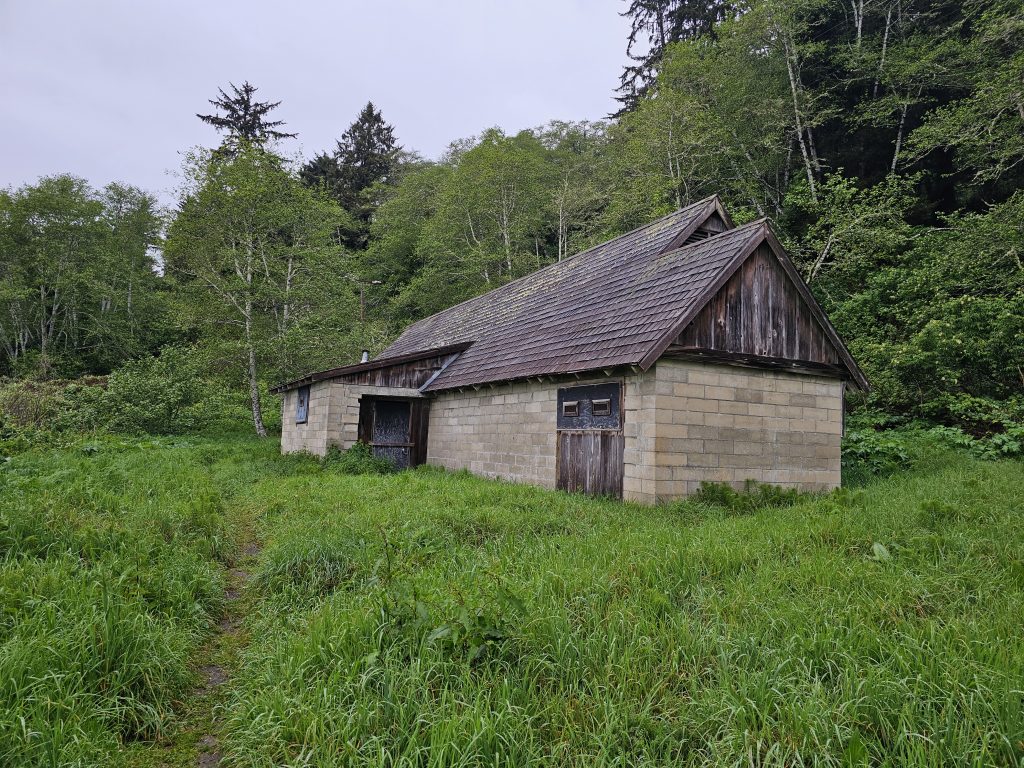
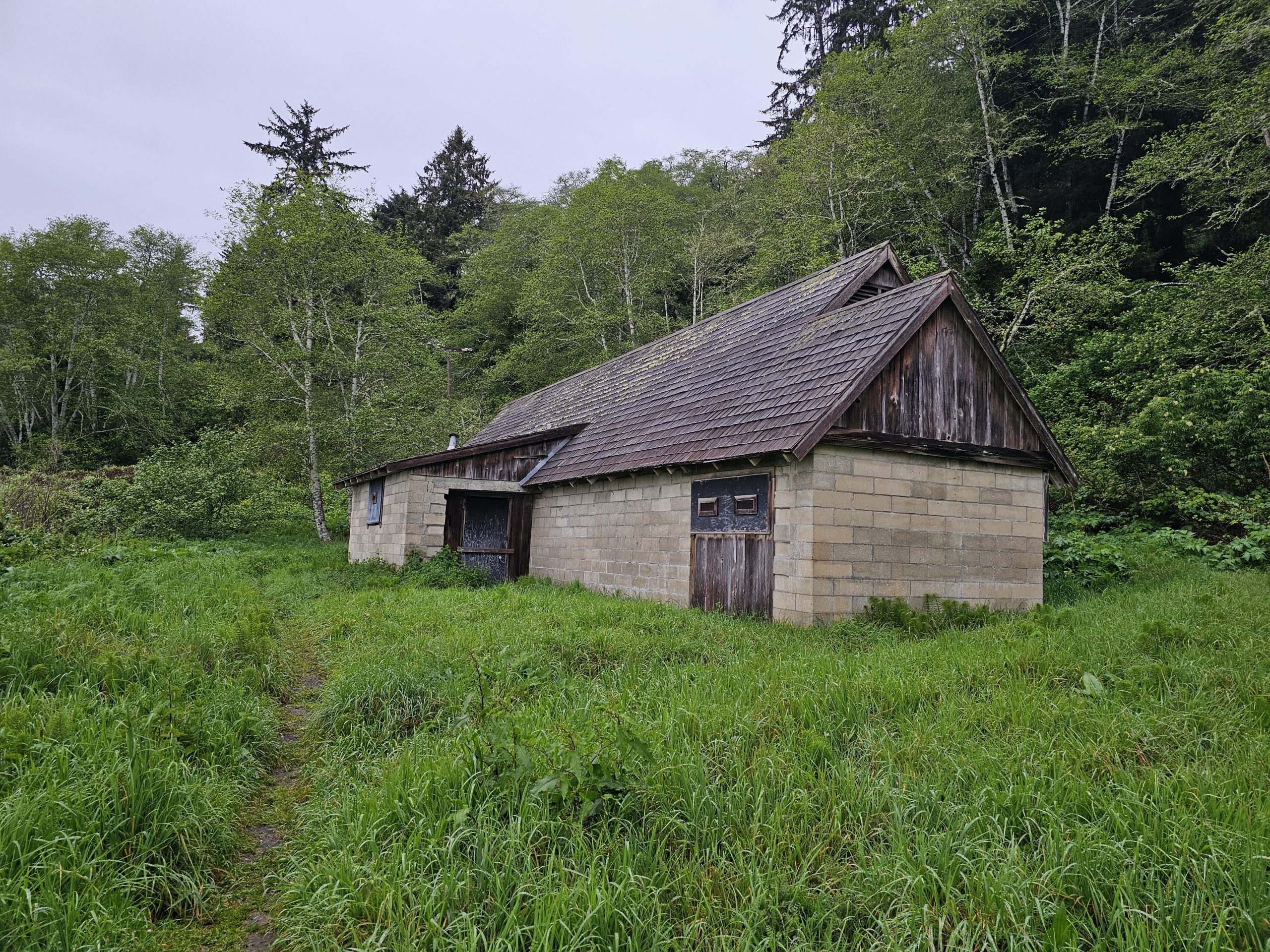
Amid the splendor of the forests exists a manmade relic of humankind’s troubled past: a WWII radar site poorly disguised as a farm. Set against the verdant backdrop with the sound of the ocean drifting near, it feels entirely out of place. The access point is a narrow side trail off a one-way gravel road, its overgrown state making it clear that few people venture down to see it.
Stepping down the path is like stepping back in time. In the 1940s, after the attack on Pearl Harbor and the unsettling appearance of Japanese submarines along the American West Coast, the United States rushed to strengthen its coastal defenses. Military planners proposed a network of early-warning radar stations stretching from the Canadian border to Mexico. The initial proposal called for seventy-two different radar sites, but only sixty-five were built. Of these, twenty-two remained in continuous use for the duration of the war, including Klamath River Radar Station B-71, hidden deep within the quiet grandeur of the Redwoods.
Rather than retrofit existing buildings, the Klamath River Radar Station was built from scratch and disguised to look like a typical American farm. To an outsider, it was meant to resemble a farmhouse, barn, and outhouse. In reality, the “farmhouse” was the power building, the “barn” housed operations, and three anti-aircraft guns were discreetly hidden on site.
The buildings themselves were rectangular concrete-block structures, but a false facade was constructed around them to mimic rustic farm architecture. Board-and-batten siding, fake windows, and nonfunctional dormers on a wood-shingled gable roof completed the illusion. Up close, though, the disguise was obvious; through the faux windows, the stark concrete interior was plainly visible.
Walking Into the Past
The narrow, overgrown footpath is lined with thorny plants on both sides. It leads down the hillside, sharpening the contrast between the timelessness of the trees and the lingering apprehension of a bygone era. The descent down the cliffside felt like a blend of forest hiking and urban spelunking. The silence of the trees mixed with the distant sound of the ocean created an atmosphere that felt more like a Halloween evening than a historical site. Standing among the dilapidated structures as nature slowly reclaimed them, it was hard to imagine the wartime bustle that once filled this place, staffed by more than thirty men.
The entire scene felt oddly out of place. Perched on a slope that is more cliff than hill, the false farmhouse façade sits awkwardly against the concrete block it was meant to hide. At first glance, the windows look bricked over; look again and you realize they were never windows at all. Time, weather, and neglect have stripped away large portions of the disguise, leaving the utilitarian structure exposed. The contrast between its hasty wartime construction and the forest’s timeless calm is striking. Standing there, the anxiety and uncertainty of the early years of WWII feels almost palpable, as if the building itself has become a monument to that fear.
What the Forest Teaches Us
Standing between the remnants of a wartime disguise and trees that have outlasted empires made me reflect both on our insignificance and our interconnectedness. Regardless of the turmoil we create around them, the Redwoods keep growing.
Most visitors to the Redwoods will never see this station. They hit the park’s highlights, marvel at some of the most majestic trees in the world and leave with a sense of awe. But those who venture off the well-traveled paths find something else: a reminder that even in places of great beauty, fear has shaped the landscape. At first, the contrast between the ancient forest and wartime outpost feels discordant, but the longer I stood there, the more I realized they share a quiet truth. The trees endure because they are part of a vast, interconnected community. Their strength is rooted in networks we cannot see. People, too, rely on the communities we inherit and the ones we choose to build. In spite of fear, those connections, like the roots beneath the Redwoods, allow us to endure.
As I walked back up the narrow trail to the car, I kept thinking about how many stories are hidden in plain view and how many more the Redwoods have witnessed that will be forever lost to time. Some of the most significant moments in history can be effortlessly overlooked when placed beside such astounding beauty. Perhaps that’s the lesson these trees offer us: fear fades, but connection, like the forest, endures.

About the Author
Amanda Hughes writes about the intersections of place, history, and memory. Her work blends travel, archival research, and narrative nonfiction to uncover the stories hidden in plain sight.
Read more about Amanda → https://thearchivelens.com/about/
Travel Note:
Coastal Drive becomes one‑way, even though the park map doesn’t show it. Drive the loop clockwise.
To reach the site: Take Klamath Beach Road west off Highway 101, just south of the Klamath River. When the road meets Coastal Drive, turn left and follow signs toward High Bluff Overlook. (Stop there. The views are worth it!) Continue along the one-way road until you see a small pull‑off and an easy‑to‑miss sign. Look down the hill and you’ll spot the roof of the power building or “farmhouse” tucked just below you.
For more information, the National Park Service has a brief page on the site: https://www.nps.gov/places/redwoodradarstation.htm
Leave a Reply